
Financial markets often exhibit repetitive patterns influenced by institutional participants, commonly referred to as "smart money." These entities, including large banks, hedge funds, and other financial institutions, possess significant resources and market influence, enabling them to steer price movements over time.
Recognizing these structures is paramount, as you unveil the phases of accumulation, trend progression, and reversals. Align your positions with the market's direction and you’ll enhance your decision-making and avoid common pitfalls.
What Is Market Structure
Market structure is the framework upon which price movements are built, primarily defined by liquidity levels and swings that indicate trend direction.
Swing Highs and Swing Lows
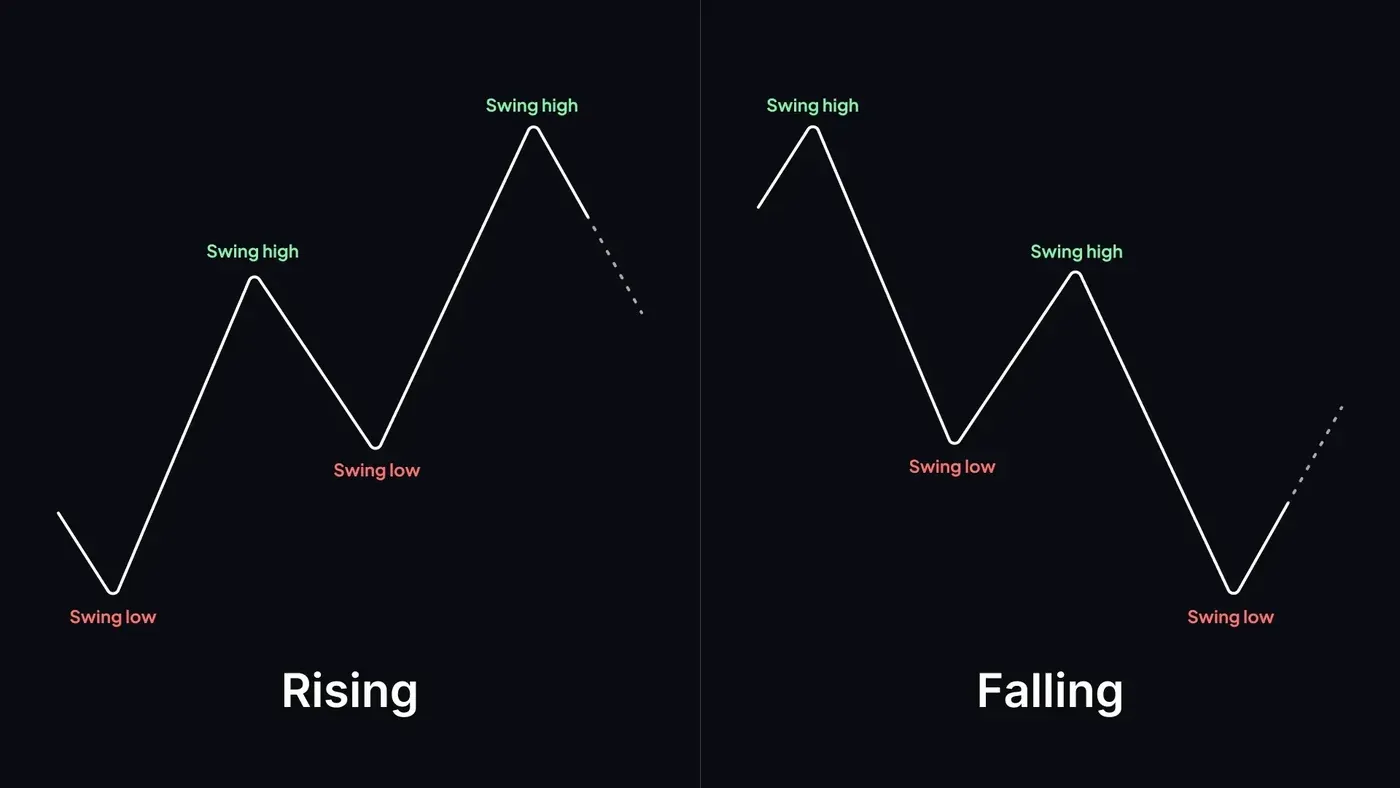
Swings serve as the fundamental components of market structure:
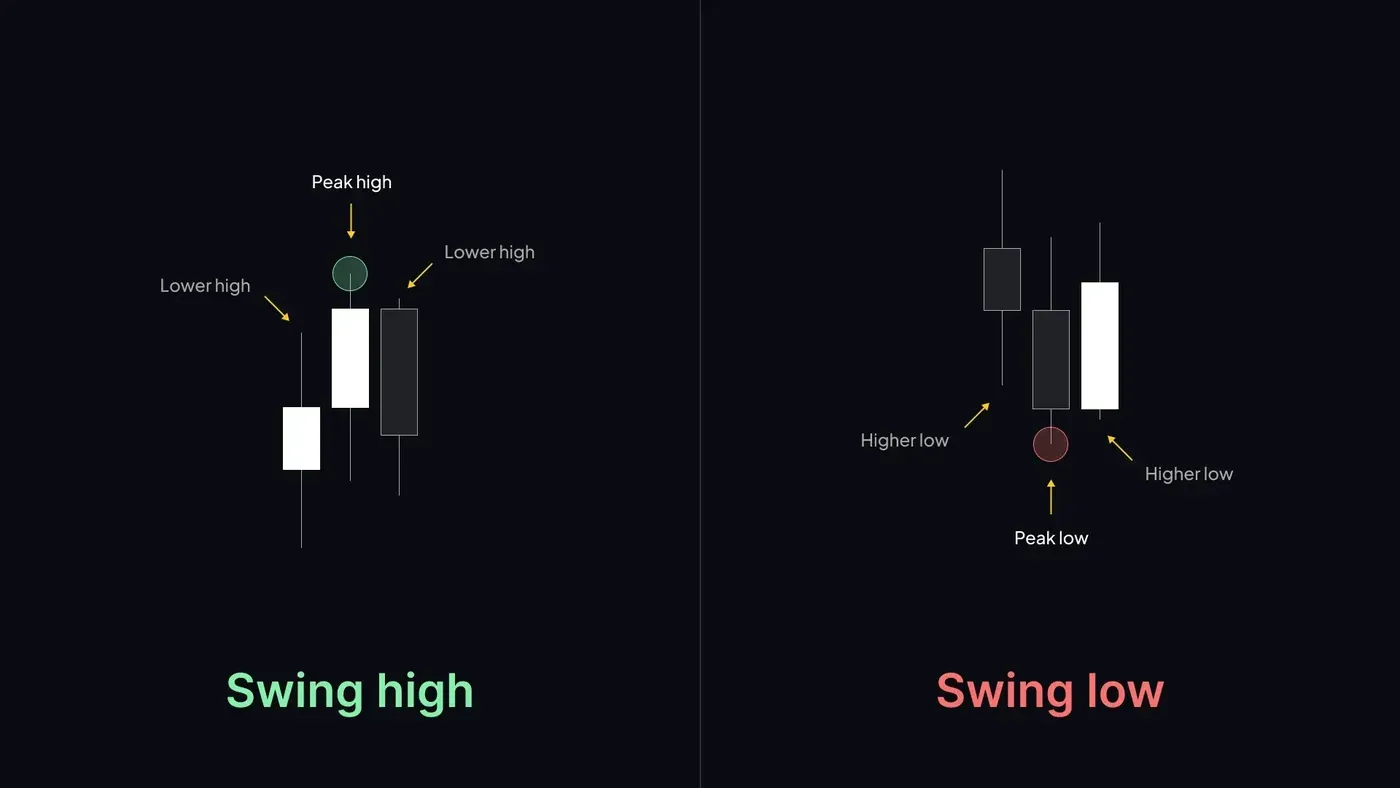
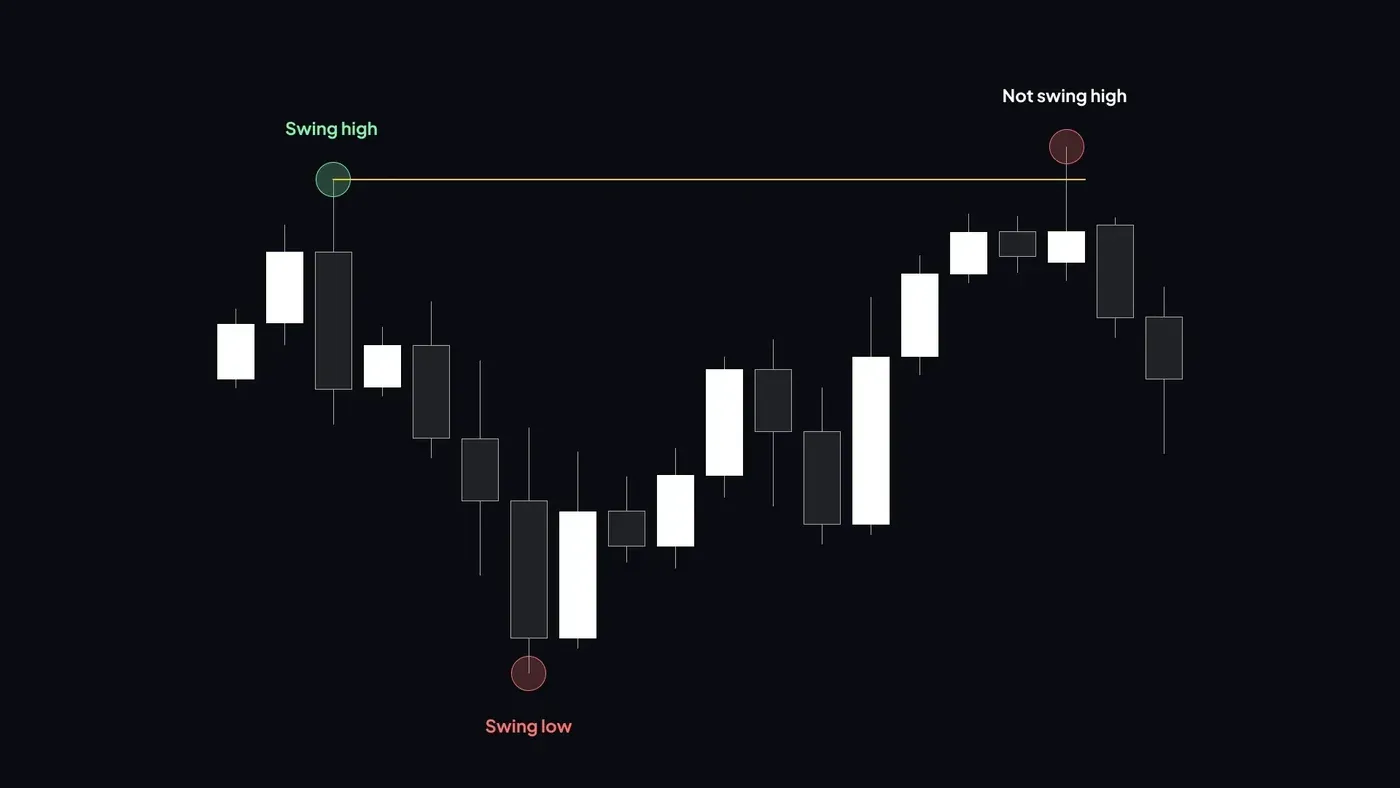
- Swing High: this occurs when a price reaches a peak, flanked by lower highs on both sides.
- Swing Low: this forms when a price hits a trough, with higher lows on either side.
These swings are pivotal in identifying potential reversals, liquidity zones, and assessing trend strength.
A consistent formation of higher highs and higher lows signals an uptrend, whereas lower highs and lower lows suggest a downtrend.
For a swing point to be validated, the price must break the previous swing high or low with a decisive candle body close, confirming a shift in market structure. Merely wicking above a swing high or below a swing low without a close is considered a liquidity sweep rather than a structural change.
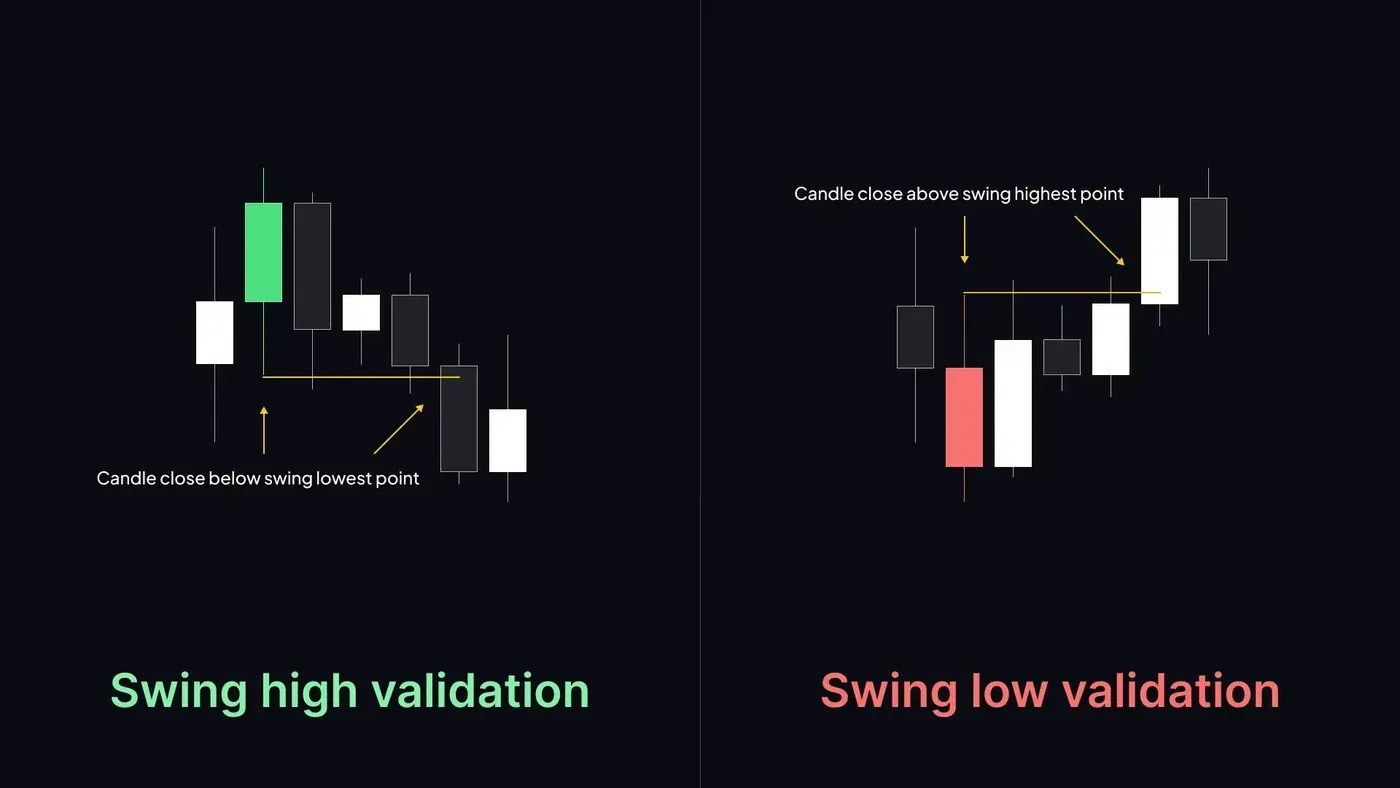
A structural swing point is only valid if the previous swing high or low has been broken with a candle body close, confirming a shift in market structure. If price only wicks above a swing high or below a swing low without a close, it is considered a liquidity sweep and not a structural shift.
What Is Price Action?
Price action is just a fancy way of saying: Watch the chart. No indicators, no clutter. Just the actual price movement.
The core idea is to read what the market is doing based on:
- Swing highs and lows
- Trends (uptrend/downtrend)
- Key zones where price reacts strongly (support/resistance)
Combining price action with smart money concepts helps you understand why price is moving — not just where.
The Basics of Swing Highs and Lows
One of the most important parts of SMC is identifying swing highs and lows:
A swing high happens when a candle has two lower highs on either side.
A swing low is the opposite — one low candle with two higher lows on each side.
These need to be confirmed by a candle closing past that middle candle's high or low.
Once you’ve marked these swings, you can figure out whether you’re in an uptrend (higher highs, higher lows) or a downtrend (lower highs, lower lows). That tells you whether to look for long (buy) or short (sell) setups.
The Role of Liquidity in Market Movements
Liquidity is the lifeblood of financial markets, driving price movements and creating opportunities for traders.
Liquidity Pools and Institutional Influence
Major liquidity pools often form around swing highs and lows:
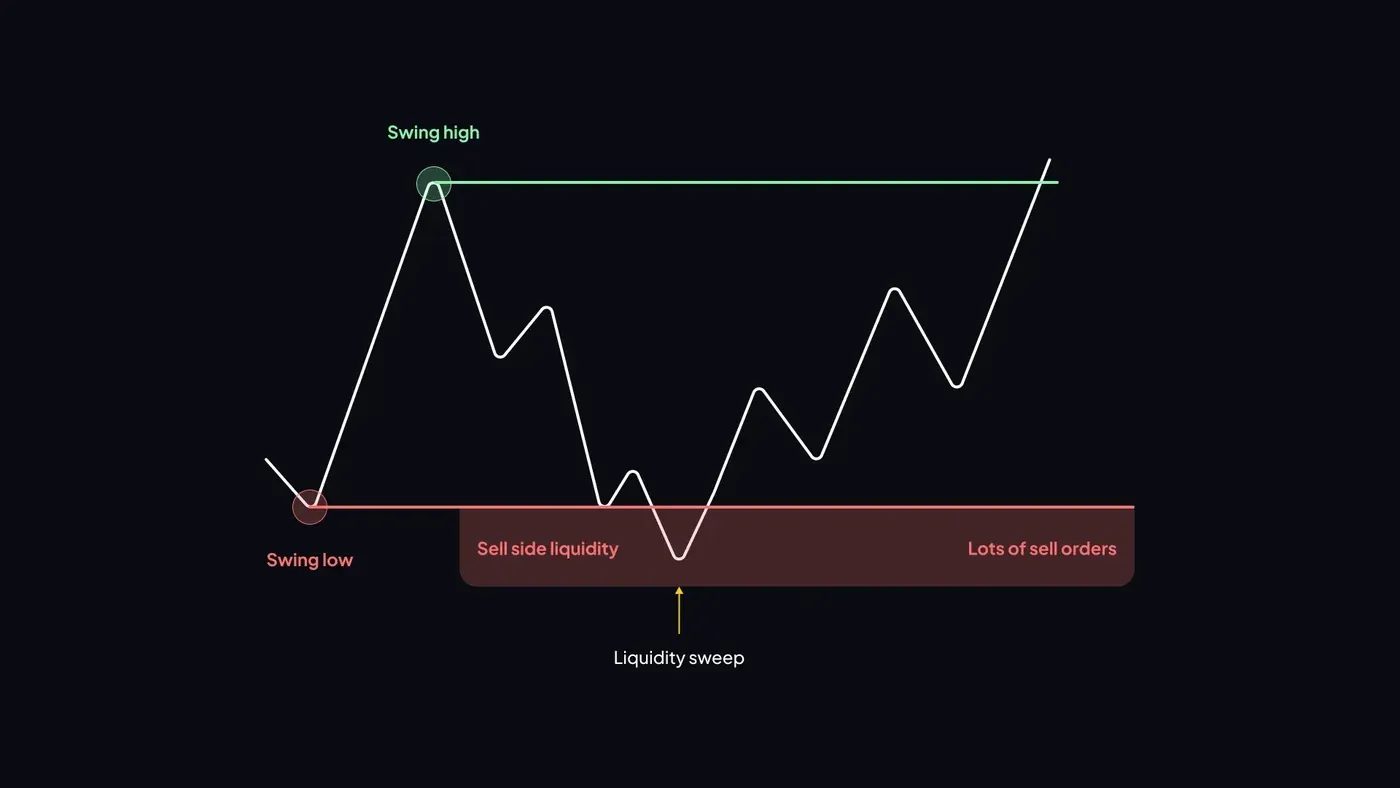
- Sell-Side Liquidity (SSL): located below swing lows, where long traders place stop-loss orders, creating a pool of sell orders.
- Buy-Side Liquidity (BSL): found above swing highs, where short traders place stop-loss orders, resulting in a pool of buy orders.
Institutional traders, or smart money, target these liquidity zones to execute large orders. Since they trigger these stop-loss orders, they can create the necessary liquidity to enter or exit substantial positions, often leading to price reversals that catch retail traders off guard.
Find more details about price reversals in this webinar:
Liquidity Sweeps and Market Manipulation
A common tactic employed by institutions is the "liquidity sweep," where the price briefly moves beyond a key swing point, triggering stop-loss orders before reversing. This maneuver allows institutions to enter positions at favorable prices, exploiting the liquidity provided by retail traders' stop orders.
If you want to avoid manipulation traps, it’s essential that you understand this behavior. Recognizing potential liquidity sweeps helps you anticipate false breakouts and position yourself accordingly.
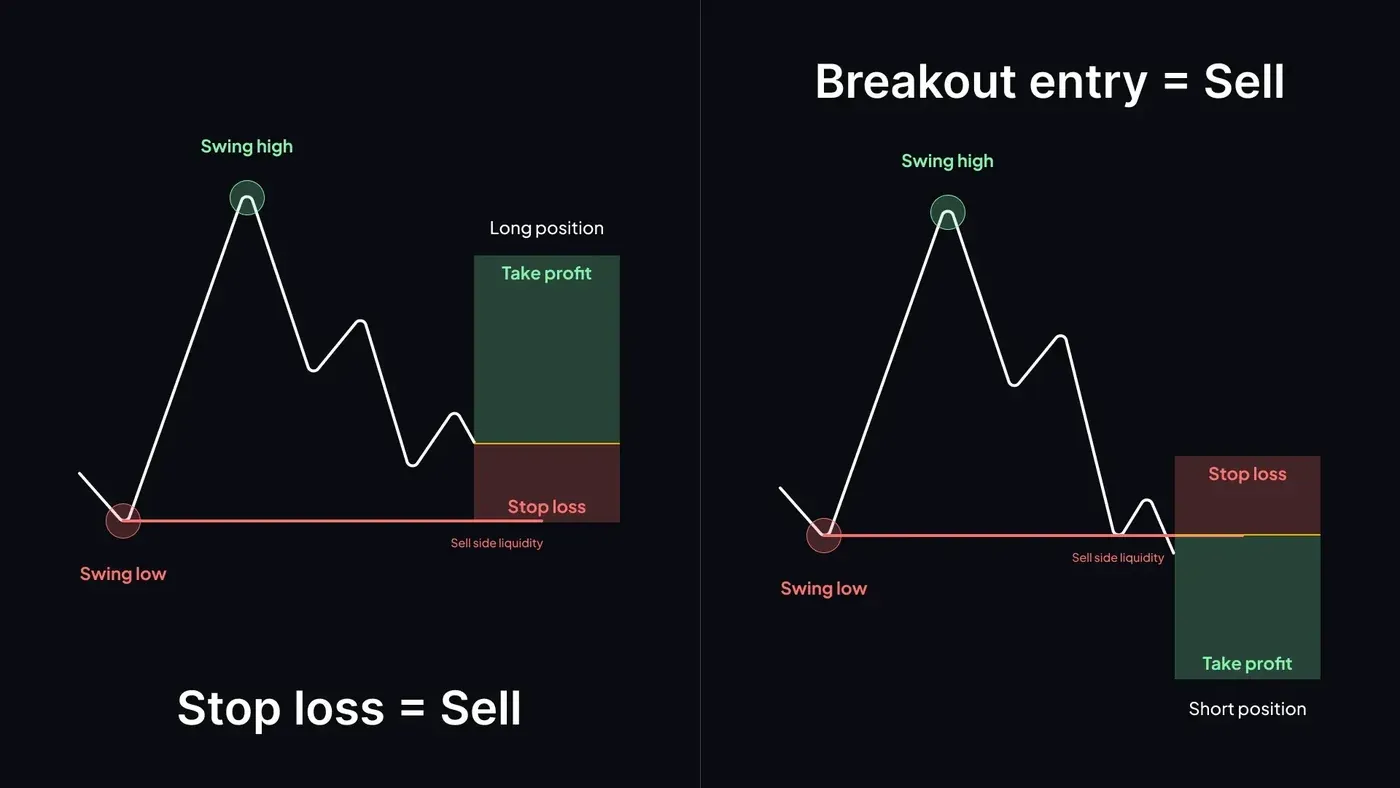
Combining liquidity analysis with an understanding of market structure offers traders a comprehensive view of market dynamics.
Identifying Key Structural Points
Key structural points, such as validated swing highs and lows, serve as reference points for:
- Trend Identification: determining the current market trend direction.
- Entry and Exit Points: establishing optimal points for entering or exiting trades.
- Risk Management: setting stop-loss levels to manage potential losses effectively.
As you analyze how price interacts with these structural points, you can gain insights into potential future movements and make informed trading decisions.
How to Avoid Manipulation Traps
Here’s how to steer clear of traps set by smart money:
- Be skeptical of breakouts: not all breakouts indicate a new trend; some are engineered to trigger stop-loss orders.
- Wait for confirmation: ensure that breakouts are accompanied by strong volume and a decisive close beyond key levels.
- Analyze order flow: monitoring order flow can provide insights into institutional activity and potential manipulation.
Practical Application: Analyzing Historical Price Charts
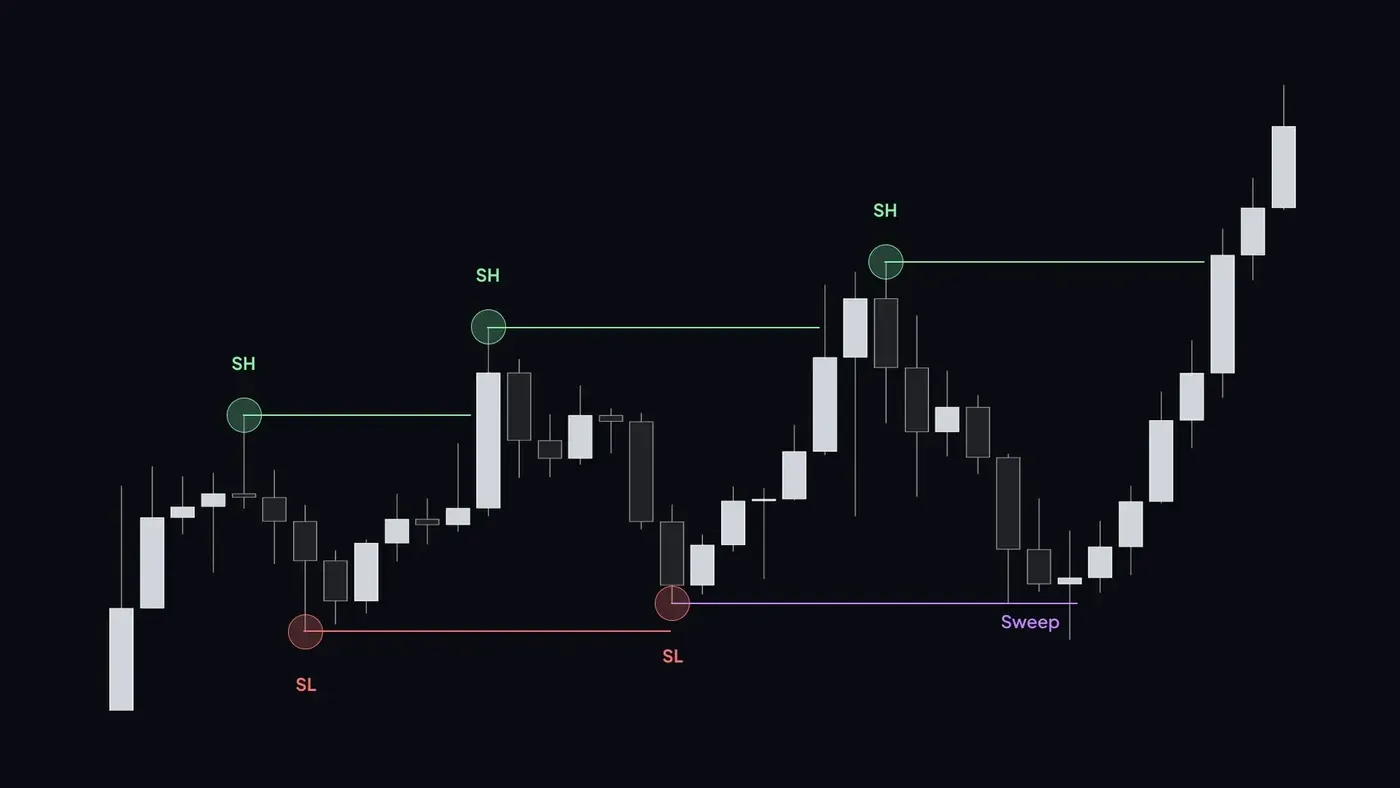
If you want to thoroughly understand market structure and liquidity, practice on historical price charts:
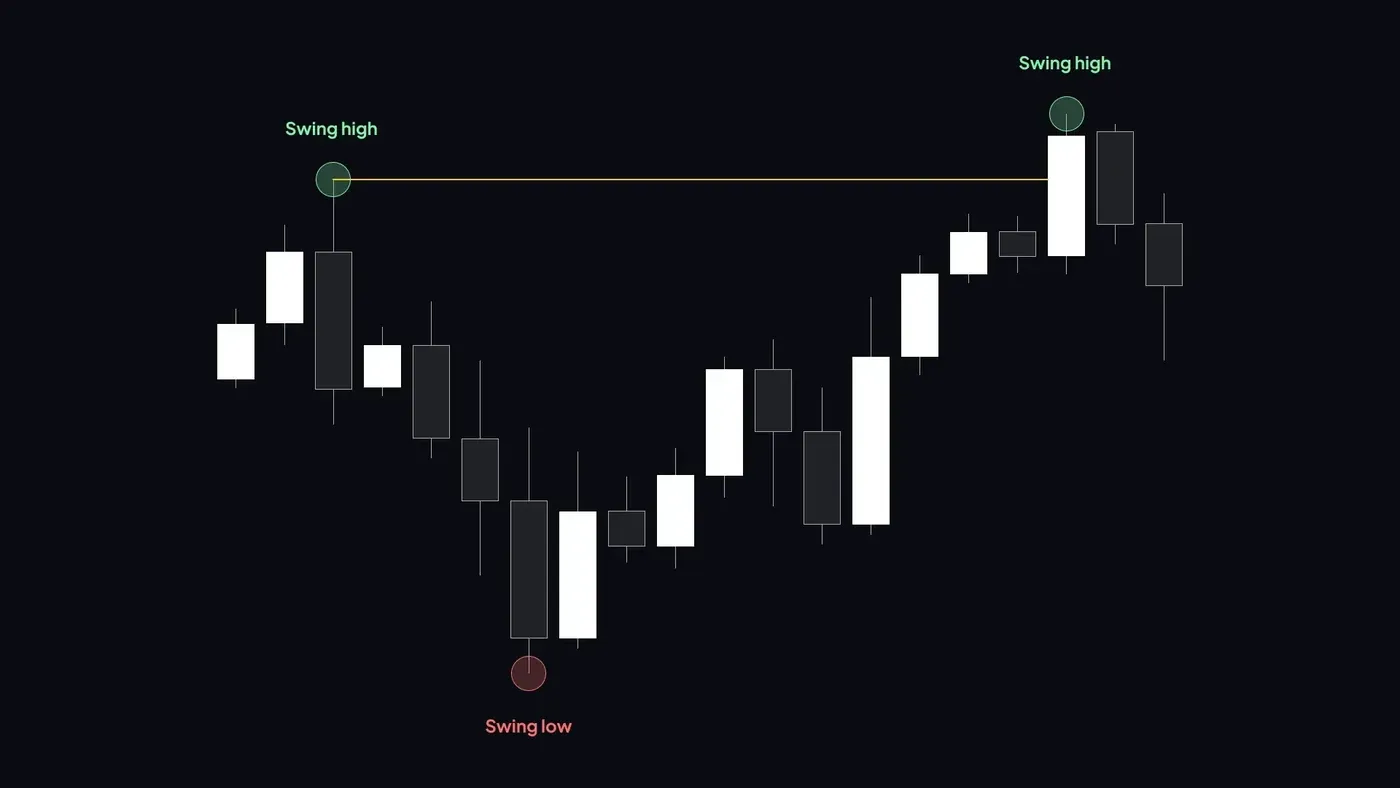
- Identify structural swing highs and lows: mark these points to visualize market structure.
- Spot liquidity sweeps: look for instances where the price briefly breaches a swing point and then reverses.
- Locate liquidity pools: determine areas with clustered stop-loss orders, indicating potential liquidity zones.
The Impact of High-Frequency Trading and Algorithms
High-frequency trading (HFT) and algorithmic strategies play a significant role. These automated systems can execute large volumes of trades in milliseconds, often targeting the same liquidity zones as traditional institutional traders.
The presence of HFT can lead to increased volatility around key structural points, making it imperative to account for these factors in your analysis. Understanding the influence of algorithms can help you anticipate rapid price movements and adjust strategies accordingly.
Final Thoughts
Learn to integrate knowledge of market structure, liquidity behavior, and price action, and you’ll gain a significant edge in understanding price movements. Recognizing institutional manipulation and the impact of algorithmic trading helps you make strategic trading moves, avoiding common retail pitfalls.
Keep in mind that you can use swing points to:
- Identify market structure shifts and trend direction.
- Set stop-loss levels below swing lows in uptrends and above swing highs in downtrends.
- Determine key liquidity pools where institutional traders may drive price action.
Take the concepts from this article and practice them on real charts with a repeatable workflow. Start a free trial on Altrady to map swing highs and lows, set alerts around liquidity pools, and verify structure breaks with clean candle closes. You get a 5-day free trial with no credit card, and if you do not upgrade after that, your account is downgraded to Altrady’s free paper trading plan so you can keep practicing.
FAQ
What is market structure in trading?
Market structure is the framework of price movement that helps define trend direction and key decision zones. It is commonly read through swing highs and swing lows, and it becomes more actionable when combined with liquidity concepts like stop clusters above highs and below lows.
How do you validate a swing high or swing low?
A swing high forms when a peak is surrounded by lower highs on both sides, and a swing low forms when a trough is surrounded by higher lows on both sides. To validate a swing point for structure, price should break the prior swing level with a candle body close, not just a wick, so the shift reflects real acceptance rather than a brief probe.
What is the difference between a liquidity sweep and a structure break?
A liquidity sweep typically pierces a prior swing high or swing low and then closes back inside the range, often leaving a long wick, which signals a stop run rather than a true change. A structure break closes decisively beyond the key level, suggesting the market accepted the new area and may be shifting trend or continuing with momentum.
Where do buy side liquidity and sell side liquidity usually sit?
Buy side liquidity often rests above swing highs where short traders place stops, and sell side liquidity often rests below swing lows where long traders place stops. These zones matter because large participants often need that clustered liquidity to enter or exit positions efficiently without excessive slippage.
How can traders avoid common manipulation traps around swing levels?
It helps to treat first breakouts as suspicious, especially when price only wicks through a level and snaps back. Waiting for a clear close, looking for strong follow-through, and using strict risk rules can reduce false entries. When volatility spikes around key levels, consider that algorithms and high-frequency trading can amplify fast moves, so confirmation and position sizing matter even more.