
DeFi risk is not only about token prices or yield. Sometimes the weakest point is an administrative key that can upgrade a contract, change permissions, or move control to a new implementation. If that key is compromised, a protocol can become unsafe even when the original code looked clean.
In 2026, admin key compromises became a recurring lesson for traders. CoinDesk reported that Wasabi Protocol lost about $4.55 million after attackers compromised a deployer admin key, with the incident compared to larger key-compromise exploits involving Drift Protocol and Kelp DAO.
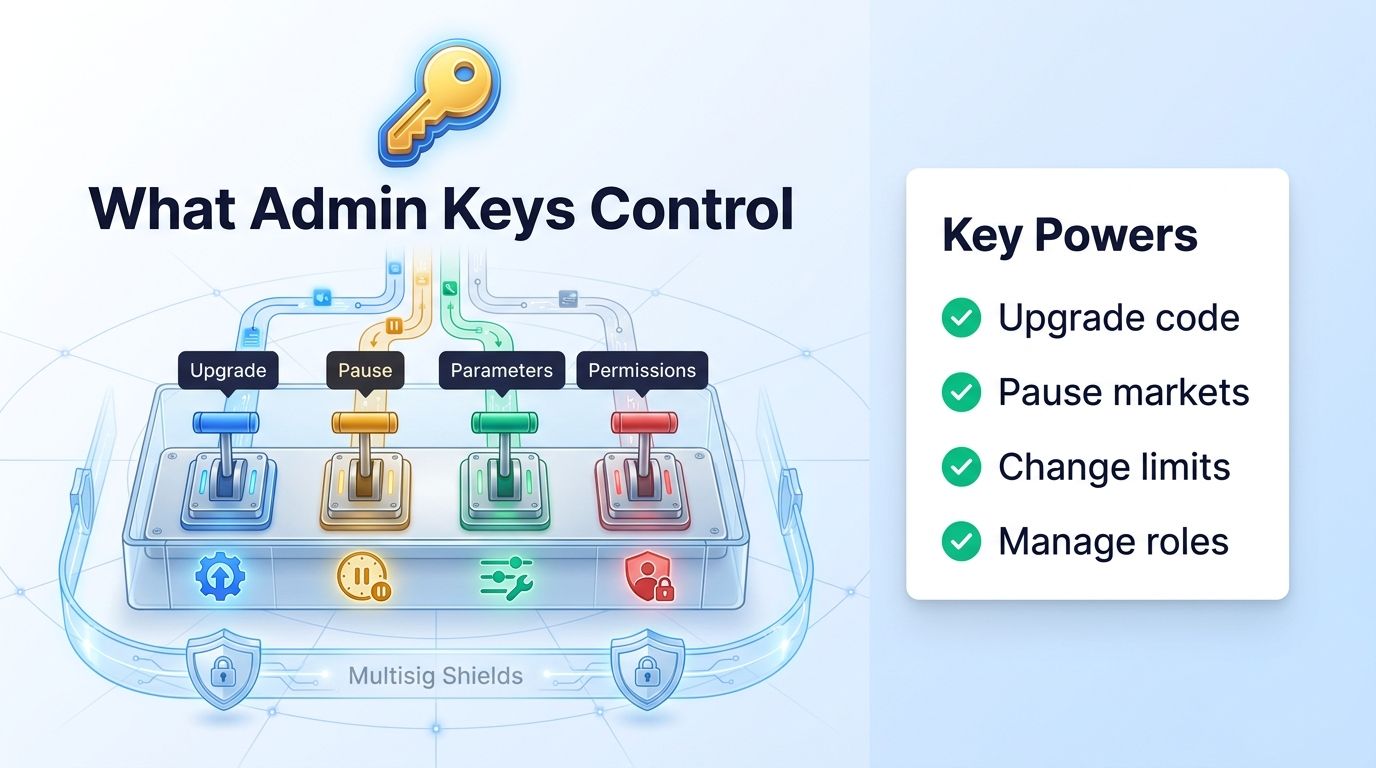
What Is an Admin Key?
An admin key is a privileged wallet or role that can control parts of a protocol. It may upgrade contracts, pause markets, change parameters, whitelist addresses, or manage emergency actions. Admin keys exist because protocols need maintenance, but they also create concentrated power.
The question is not whether admin keys are always bad. The question is how much power they have and what safeguards surround them. A single externally owned account with immediate upgrade power is very different from a multisig protected by a public timelock.
- Admin keys can change protocol behavior.
- Upgradeable contracts increase maintenance flexibility.
- Single-key control creates a major failure point.
- Timelocks and multisigs reduce emergency abuse risk.
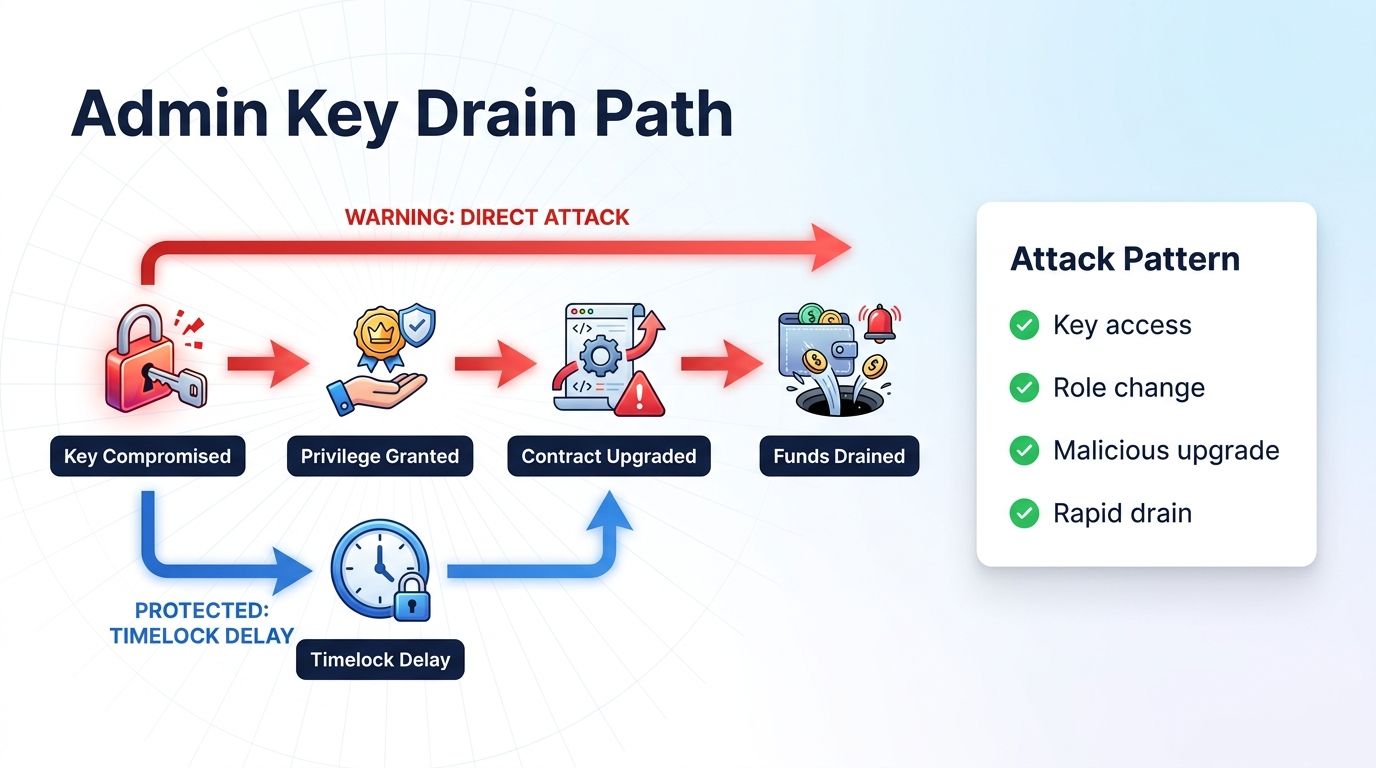
How Admin Key Drains Happen
The Wasabi case showed a common pattern. The attacker allegedly gained control of a deployer key, granted themselves privileges, and upgraded vault contracts to malicious versions. Users did not need to approve a new token or click a new link. The protocol logic itself changed.
This is why upgradeability is a double-edged tool. It lets teams patch bugs and improve systems. But if the upgrade path is controlled by a weak admin setup, the upgrade function can become the attack path.
- A privileged key gets compromised.
- The attacker changes permissions or implementation.
- Vault logic is replaced or redirected.
- Funds are drained before users can react.
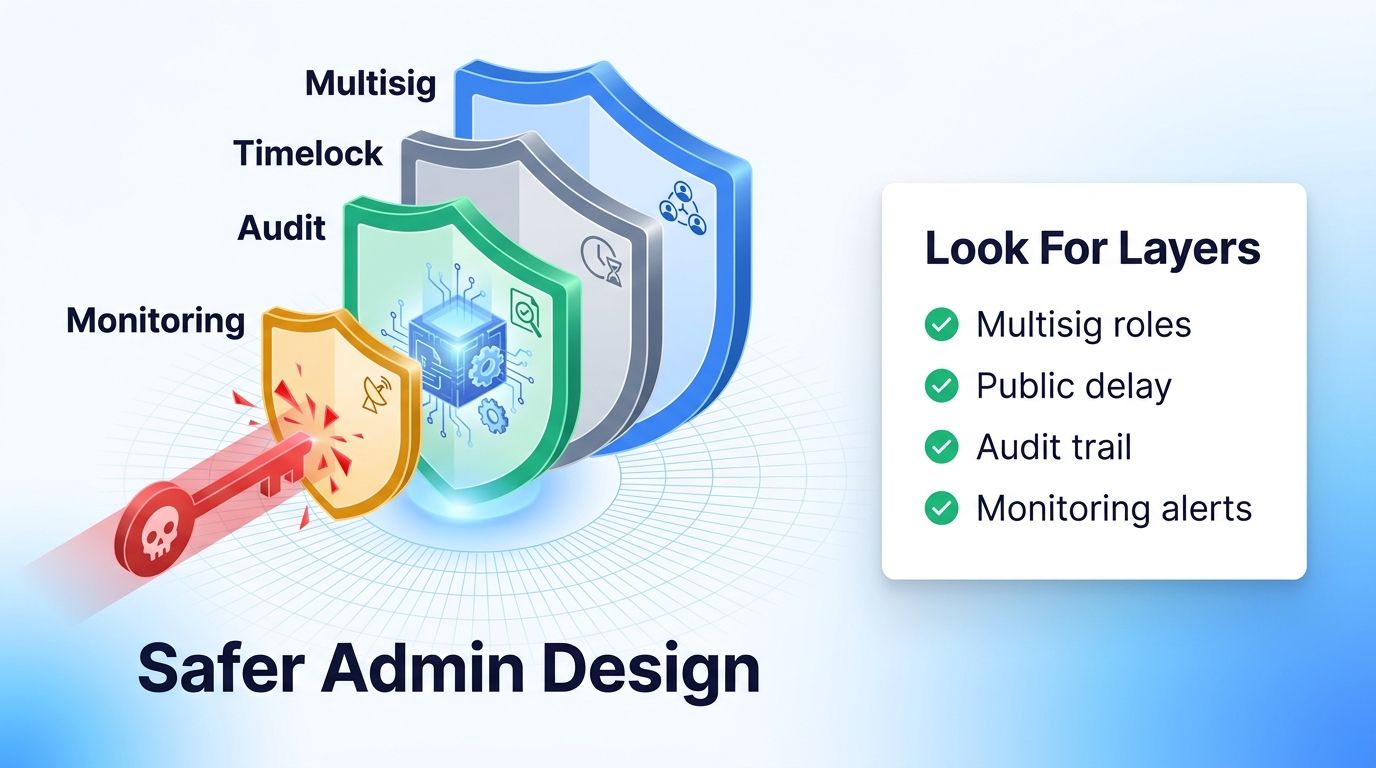
The Safeguards Traders Should Look For
Before using a DeFi protocol, traders should check whether critical admin actions are controlled by a multisig, whether a timelock delays upgrades, whether emergency pause powers are documented, and whether the team publishes audits or monitoring systems.
No safeguard removes all risk. A multisig can still be poorly managed. A timelock may be too short. An audit can miss business-logic flaws. But layered controls make it harder for one compromised key to become an instant protocol drain.
- Multisig control for privileged roles.
- Timelocks before upgrades become active.
- Clear emergency pause documentation.
- Public monitoring for contract changes.
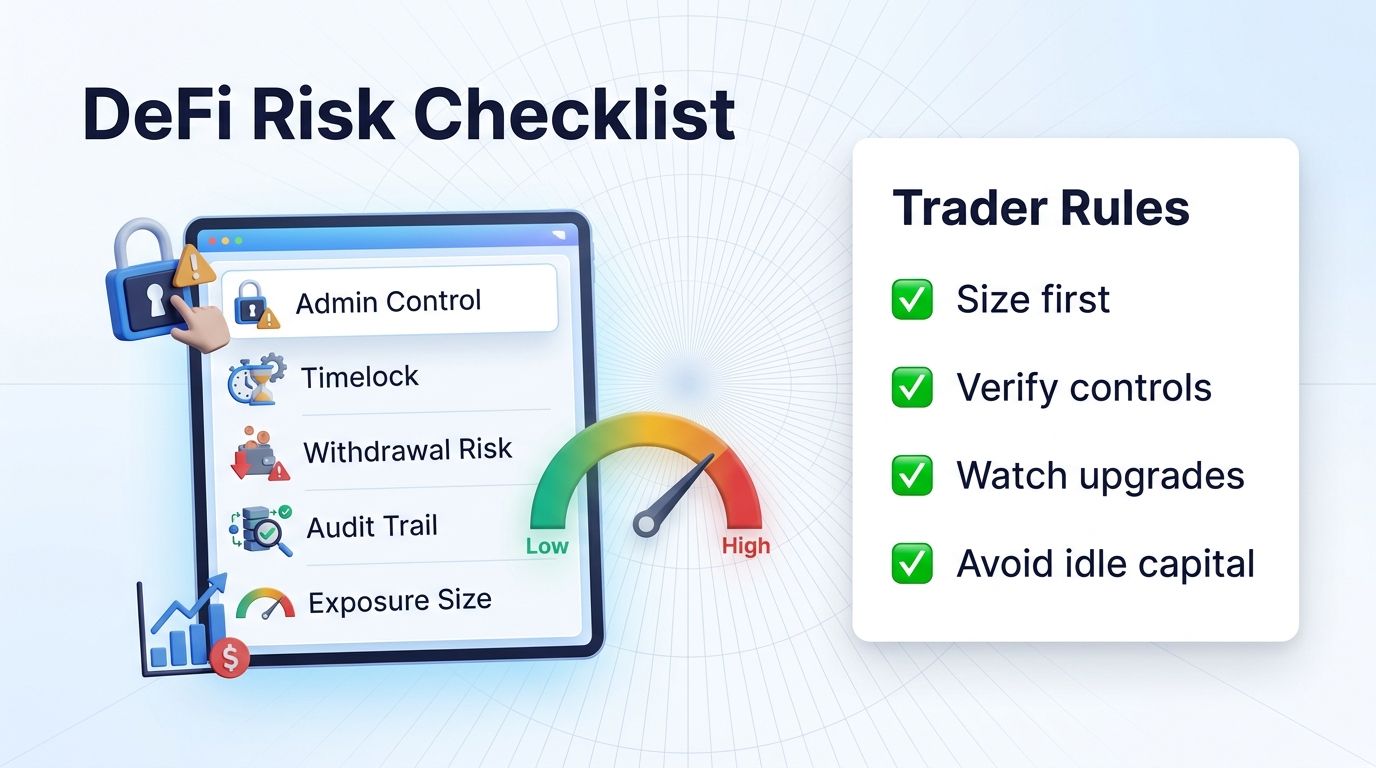
A Practical DeFi Risk Checklist
For active traders, the safest approach is position sizing first. Even a respected protocol can fail. Keep protocol exposure limited, diversify venues, avoid keeping idle capital in complex contracts, and treat unusually high yields as a reason to inspect risk more carefully.
A good checklist asks: Who can upgrade the contract? How long is the delay? Can withdrawals be paused? Are admin wallets public? Has the protocol handled incidents before? If those answers are unclear, reduce size or skip the protocol.
- Limit exposure per protocol.
- Avoid leaving idle funds in complex vaults.
- Prefer transparent admin controls.
- Use risk alerts for large contract changes.
Why This Risk Is Easy to Miss
Admin key risk is easy to miss because it is not always visible in the user interface. A protocol can have a polished app, a respected team, and a strong yield page while still relying on privileged roles that most users never inspect. The risk lives in governance, upgrade permissions, and operational security.
Many traders only review yield, TVL, token price, and social attention. Those metrics say little about who can change contract logic. A vault can look healthy until the upgrade path is abused. Once permissions change, the user may have very little time to react.
That is why protocol selection should include a security-readiness layer. If the documentation does not explain admin roles, upgrade paths, emergency controls, and audit status, the protocol is asking users to trust an invisible system.
- User interfaces do not reveal every permission.
- TVL does not prove admin safety.
- Upgrade paths can become attack paths.
- Documentation quality is part of risk review.
How to Size Around Protocol Risk
The first defense is not a perfect audit. It is position sizing. Even a protocol with good controls can fail through oracle issues, governance mistakes, signer compromise, or unexpected integrations. No single venue should hold capital that a trader cannot afford to have frozen or impaired.
A practical approach is to separate active trading capital from passive protocol exposure. Active capital can sit on venues where it is needed for execution. Passive capital should face stricter protocol requirements, shorter review cycles, and clearer exit plans. The more complex the contract stack, the smaller the starting size should be.
Risk controls also need updates. A protocol that was safe last month may add new vaults, new assets, new permissions, or new integrations. Each change can alter the risk profile. Security review is a recurring process, not a one-time checklist.
- Start smaller on complex contracts.
- Separate trading capital from yield exposure.
- Review protocol changes regularly.
- Have an exit plan before stress appears.
FAQ
What is DeFi admin key risk?
It is the risk that a privileged wallet or role can change protocol behavior in a way that harms users.
Are upgradeable contracts unsafe?
Not automatically. They can be useful, but they need safeguards such as multisigs, timelocks, and monitoring.
What is a timelock?
A timelock delays a privileged action so users and monitors can see the change before it becomes active.
How should traders manage protocol risk?
Limit exposure, diversify venues, avoid idle funds in complex contracts, and check admin controls before using a protocol.